


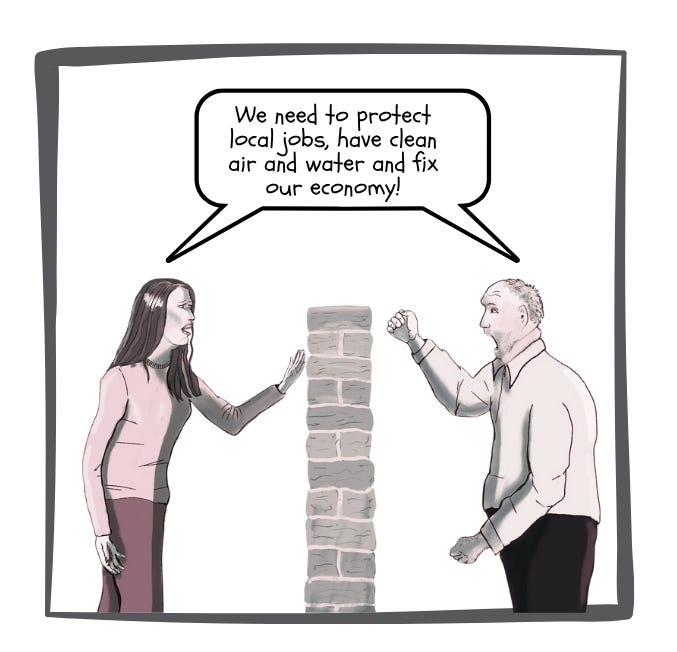
If you've ever tried to talk climate with someone who doesn't share your views, you've probably hit the wall: denial, deflection, or outright hostility.
Most people don’t like being told what to think, especially if it feels like it’s coming from ‘the other side’.
The mistake many campaigns and activists make is to start with where they want people to be, which puts the audience on on the back foot defending who they are.
So issue 1 will start where they are — with their values.
What are values and why do they matter?
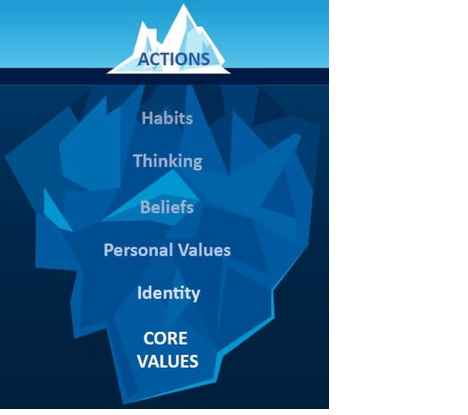
Values are our internal compass. They're the principles we use to decide what matters, what feels right, and what we stand for. Unlike passing opinions, values tend to be stable over time and deeply tied to our identity.
Values are often invisible in our daily conversations, yet they shape almost everything we believe and do. Psychological research confirms that values provide the foundation for attitudes and motivate behaviour, especially when actions align with a person’s sense of self. If the language of climate action doesn’t match someone’s moral priorities, it won’t resonate—no matter how urgent or accurate it is.
Want to go deeper? Read the full article
Why people act the way they do
Identity and social norms
Identity theory helps explain the link between values and behaviour. Our identities (as parents, workers, Brits, nature-lovers, etc.) come with scripts for how we behave. These roles are reinforced by social norms — what people like us are "supposed" to think and do. These identities come with expectations — and we tend to behave in ways that confirm them. If you see yourself as a responsible parent or patriotic citizen, you’ll support actions that align with those roles.
If climate action is framed as “leftist” or elitist, it can feel like a threat to that identity — even if the outcomes (like cleaner air or energy security) match your values.
So when a climate message threatens one of our identities (say, by implying a good parent must eat vegan or a true patriot must oppose fossil fuels), we feel discomfort. Not because we don't care, but because it clashes with who we believe we are. Studies confirm that identity alignment is a better predictor of climate action than factual knowledge alone (Stets & Burke, 2000).

So, if we want messages to land, we need to start by recognising the identities and norms that shape behaviour — and work with them, not against them.
Values across the political spectrum
Where we may differ
In a later issue we will look at the different audiences as how society as not as polarised as it may appear. Spoiler alert: We’ll draw on the More in Common seven segments work.
In the US, research reveals consistent moral patterns across the political divide. Liberals tend to emphasise values like care, fairness and protection from harm, whilst conservatives give greater weight to loyalty, respect for authority and moral purity (Haidt & Graham, 2007). These values shape far more than voting preferences; they affect how people respond to climate messaging, policies, even scientific evidence.
In the UK, party allegiance is weaker, and voters are more likely to shift their support if a party no longer reflects their core values (Evans & Neundorf, 2018). NatCen’s research suggests that, whilst British voters remain values-driven, they are more pragmatic and less bound by tribal loyalty.
Where we may agree
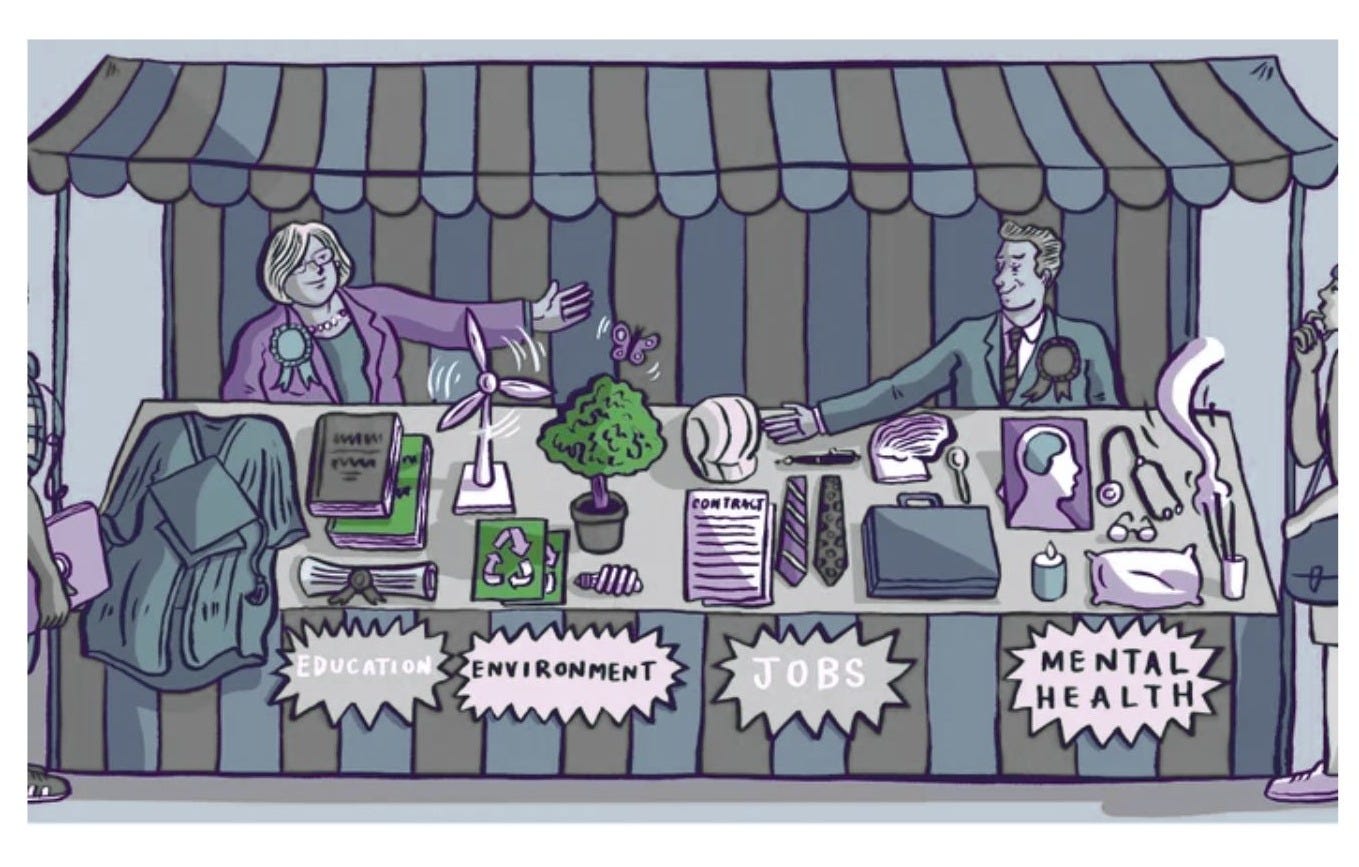
Despite polarisation in the media, a recent study by Karimi-Malekabadi et al. found that across the political spectrum, people expressed concern about climate impacts — especially when issues were framed through values they identified with. Shared goals like health, safety, security and national pride often emerged, even when motivations differed.
Take renewable energy: a progressive might support it to reduce carbon emissions, whilst a conservative might see it as a way to strengthen national energy independence. Both value the outcome — but arrive there via different routes. This highlights a key opportunity for climate communication: not to change minds, but to shift the moral framing.

Want to talk climate without triggering defences?
Listen first: What values are they expressing? What roles matter to them (parent, worker, faith leader)?
Avoid labels: Don’t lead with "climate crisis" or "net zero." Use shared outcomes ("safe homes," "cheaper bills").
Match the moral language: If they value freedom, talk autonomy. If they value care, talk protection.
Where climate communication has failed
Climate action has become politicised. Fisher (2022) reported that while concern is high across ideologies, climate policy is seen as "left-wing." This makes it harder for people on the right to publicly support climate solutions, even if they care.
The problem isn’t just content—it's tone and tribe. Krause & Scheufele (2025) show how online media ecosystems feed "identity-protective reasoning," where people reject facts that contradict their group norms. Climate psychologist Kris De Meyer calls this "motivated disbelief."
When messages are moralistic, technocratic or scolding, they don’t just fall flat—they push people further away.
Values aren't barriers — they're bridges
If there's one takeaway from the research, it's this: we make more progress by building on people’s values, not pushing against them.
Kumar and Singh (2023) found that sustainability campaigns are more effective when they connect with people’s cultural identity and emotional priorities, not just environmental facts. Hornung (2022) adds that stories resonate most when they reflect who we are — not who someone else wants us to be.
This calls for a shift — not in facts, but in framing. Instead of insisting 'this is what must be done,' we start by asking: what do you already care about?
Clean air for your children? Secure jobs? Controlled energy bills? Climate action can support all of those — if we frame it through the right lens.
