


The sustainability world is overflowing with slogans that sound good on tote bags but fail to make any real impact - Every little helps / Think global, act local / Reduce, Reuse, Recycle - lovely sentiment, questionable utility.
After years of working with businesses, councils and tired humans, I hear myself repeating the same phrases over and over – my colleagues must be sick of them but they survive repeated contact with reality. They cut through noise, reduce overwhelm and, most importantly, help people act with clarity rather than guilt or performance.
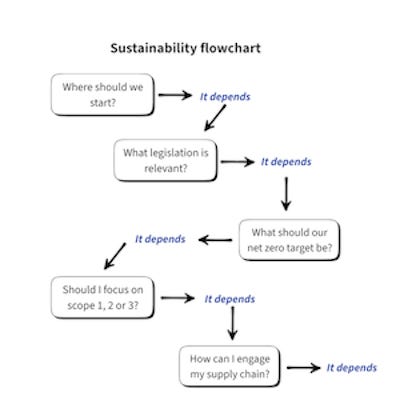
1. The answer to all sustainability questions is… it depends
My number one phrase – I must say this weekly at least! Followed up closely by “if there was one thing you could definitely do, we may have mentioned it by now!”
Sustainability is a complex area – that’s why we have so much trouble communicating it effectively. This phrase creates space for inquiry rather than tribalism. It shifts the conversation from “what’s the right answer?” to “what matters in this specific situation?”. It also makes space for empathy – that the audience are unlikely to be sustainability experts and it’s okay if they are confused.
Research in identity and values123 shows that people decide based on alignment, not facts in isolation. “It depends” is the doorway into alignment.
2. Start with one action that actually matters — then grow it
This one is from Kris De Meyer (and I highly recommend his Ted talks – sustainability bingo is genius!).
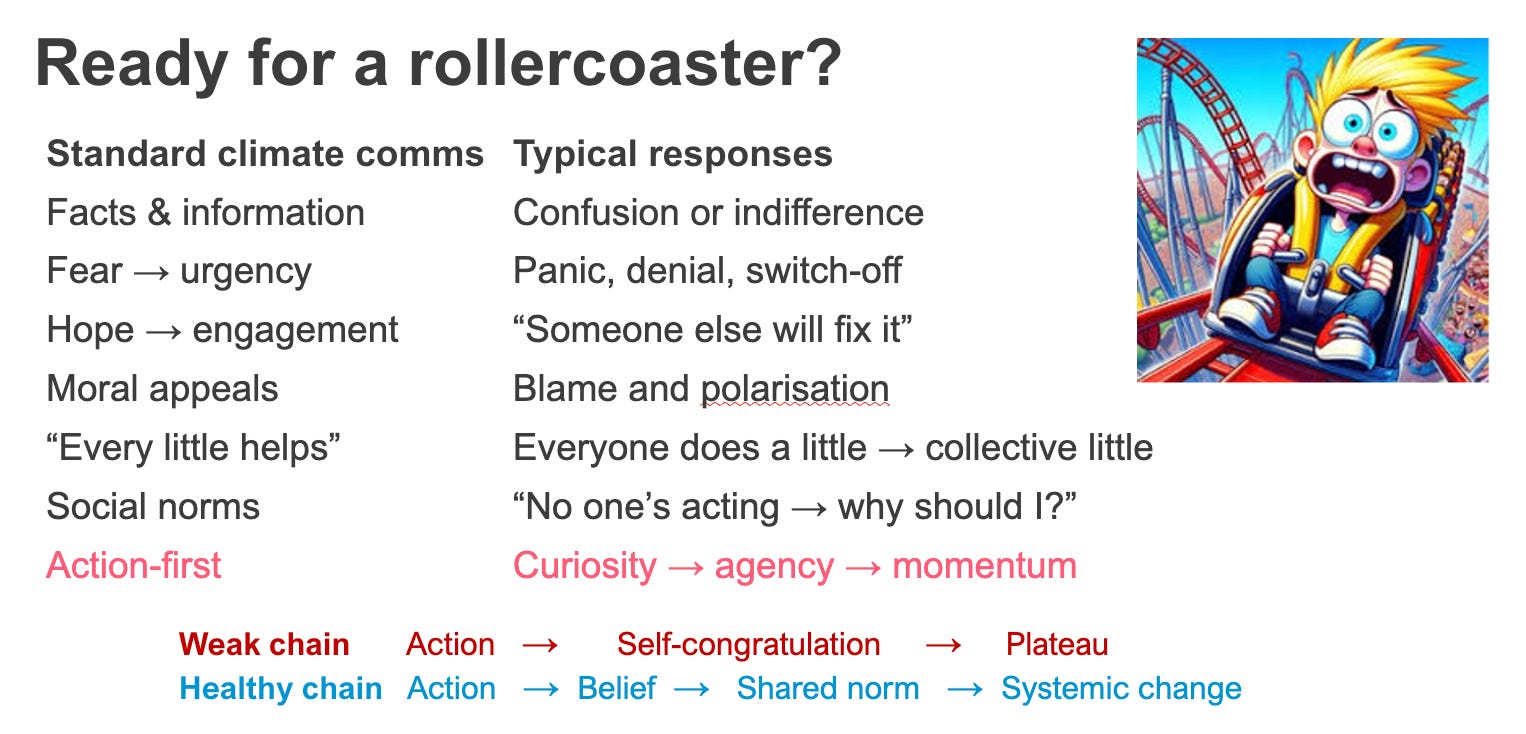
Cognitive and climate psychology research4 shows that agency increases when people begin with actions that feel meaningful and consequential, rather than diffuse or tokenistic5.
The key part of this is the quantifiable – we’re asking people to look at their life, business etc. and understand where they can make a meaningful difference and start there. They will need data to do that, not guesswork or the latest blog post.
3. What’s your carbon handprint?
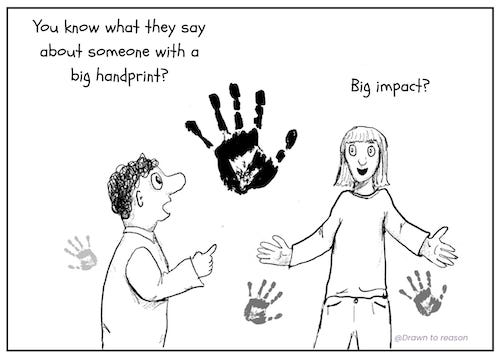
When we teach Carbon Literacy, we start with footprints (of course) but we move on to their less popular sibling, the handprint - your handprint evaluates your actions that help reduce climate change beyond your own value chain.
Presenting people with a long list of stuff they need to stop doing (or feel bad about) is not the best way to make friends and influence others. Positive framing increases follow-through, reduces eco-anxiety and helps people shift from defensive reasoning to constructive problem-solving and consideration of their potential sphere of influence
Studies on climate emotions6 and narratives7 show that positive, outward-facing frames (handprints, influence, contribution) improve follow-through and wellbeing by activating constructive rather than defensive responses.
4. If it isn’t financially sustainable, you’re doing it wrong (or your timescales are out)
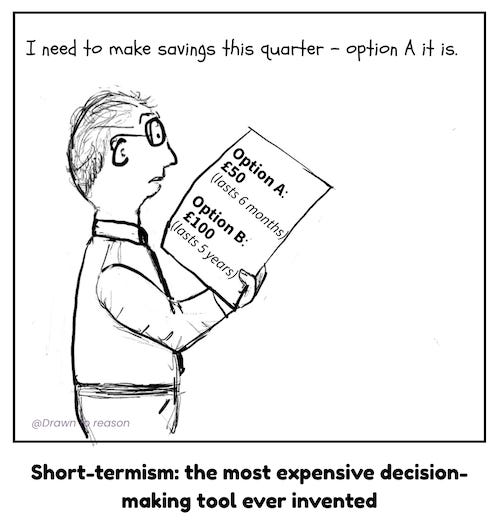
I’ve seen a disappointing number of business cases fail because ‘we can’t afford to invest in energy saving now’, only for there to be even less money in future when bills skyrocket; or sustainability features ‘value-engineered’ out of a project, only to be put back in at quadruple the expense down the road due to legislation or other pressures.
Short term thinking is the nemesis of financial and environmental sustainability. The trick is recognising timescale bias—people judge costs immediately and benefits later. This phrase pushes leaders to evaluate whole-life costs, resilience, avoided risks and value creation, not just short-term expenditure.
Evidence from UKERC8 9 and the Carbon Trust10 consistently shows that most high-impact climate actions become financially advantageous when evaluated across whole-life costs rather than quarterly budgets.
Some actions are morally required even if not immediately cost-positive. True. Yet the majority of high-impact climate actions are financially rational if assessed over the correct period. This phrase stops organisations from justifying inaction through short-termism.
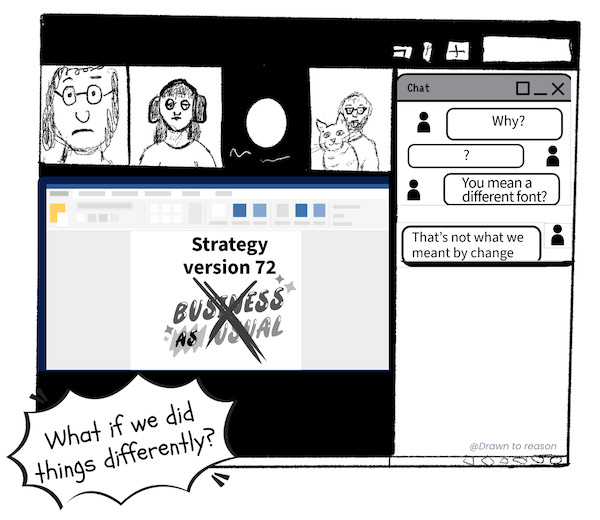
5. Business as usual must always be challengeable
This one is heavily borrowed from my favourite co-conspirator, Dr Emma Fieldhouse. It’s the reason I’ve been kicked off a few committees and why she was such a brilliant interim Sustainability Director for several organisations. Most unsustainable decisions aren’t malicious, they’re inherited. Business as usual is a sediment of assumptions, habits and outdated constraints that no one remembers choosing – challenging it from within the organisation is traitorous but consultants are welcome to do it!
No system improves until its underlying assumptions are visible and challengeable11. BAU is often just the residue of yesterday’s problems.
Try this (if you dare!):
• “We’ve always done it this way” becomes “does this still serve us?”
• “This is the process” becomes “is this process fit for purpose in 2025?”
• “We can’t change that” becomes “what would we need to change for this to work?”
Conclusion
These have become my tropes because they treat people as adults with agency, competing priorities and imperfect conditions. They avoid guilt and absolutism. They invite inquiry, values, timescales and systems thinking.
As a sustainability professional, it’s my job to make you understand your impacts (negative and positive), your sphere of influence and the complexity of it all and to challenge you to think creatively for all sorts of worldly, personal and business advantages. If you’ve worked with me, you’ve likely heard one of these!
I welcome suggestions to add to my list…
References
Stets, J. E. & Burke, P. J. (2000) ‘Identity theory and social identity theory’, Social Psychology Quarterly, 63(3), 224–237.
Sparks, P. & Shepherd, R. (2020) ‘The impact of identity on climate beliefs and behaviours’, Frontiers in Psychology, 11, 1573.
van Leeuwen, R. P., et al. (2022) ‘When values matter: the role of values in attitude formation’, Current Opinion in Psychology, 47, 101350.
De Meyer, K., et al. (2021–2024) UCL Climate Action Unit publications and talks on agency, climate emotions and meaningful action.
Hickman, C. (2020) ‘We need to (find hope) to cope with climate change: A reflection on children’s eco-anxiety’, The Lancet Planetary Health, 4(7), E278–E279.
Goldberg, M. H., van der Linden, S., Maibach, E. & Leiserowitz, A. (2022) ‘Climate stories matter: The role of narrative in climate communication’, Nature Climate Change, 12, 689–696.
Ojala, M. (2012) ‘Hope and climate change: the importance of hope for environmental engagement among young people’, Environmental Education Research, 18(5), 625–642.
UKERC (2023). Review of Energy Policy 2023. Available https://ukerc.ac.uk/publications/rep23/
UKERC (2020). Energy Efficiency Evaluation: The Evidence Base. Available https://ukerc.ac.uk/publications/energy-efficiency-report/
KERC (2021). The Value of Active Demand. Available https://ukerc.ac.uk/publications/the-value-of-active-demand/
Meadows, D. (1999) Leverage Points: Places to Intervene in a System. Sustainability Institute.